Sep 4, 2022

सौर मंडल में पृथ्वी The Earth in the Solar System

 अभ्यास 

सामाजिक विज्ञान भूगाल भाग 2 कक्षा 6

उत्तर 1 ग्रहः- कुछ खगोलिय पिंडों में अपना प्रकाश एवं ऊष्मा नहीं होती ये तारों के प्रकाश से प्रकाशित होते हैं । ऐसे पिंडों को ग्रह कहते हैं । जैसे पृथ्वी। 

तारेः- ऐसे खगोलिय पिंड जिनके पास अपनी उष्मा तथा प्रकाश होता है । ये गैसों के बने होते हैं । ऐसे पिंडों को तारा कहते हैं ।

उत्तर 2 सूर्य, आठ ग्रह, उपग्रह तथा कुछ अन्य खगोलीय पिंड, जैसे क्षुद्र ग्रह एवं उल्कापिंड मिलकार सौरमंडल का का निर्माण करते हैं । उसे हम सौर परिवार का नाम देते हैं, जिसका मुखिया सूर्य है। 


उत्तर 3 हमारे सौरमंडल में आठ ग्रह हैं । सूर्य से दूरी के अनुसार वे हैं बुध,शुक्र पृथ्वी, मंगल, बृहस्पति,शनि, यूरेनस तथा नेप्चुन ।

उत्तर 4 पृथ्वी को निम्नलिखित कारणों से अद्भुत ग्रह माना जाता है -

1. पृथ्वी न तो अधिक गर्म है और न ही अधिक ठंडी 

2.यहाँ पानी एवं वायु उपस्थित हैं जो हमारे जीवन के लिए आवश्यक हैं । 

3. वायु में आक्सीजन है जो हमारे जीवन के लिए आवश्यक हैं ।

इन्हीं कारणों से , पृथ्वी सौरमंडल का सबसे अद्भुत ग्रह है। 

उत्तर 5 चंद्रमा पृथ्वी का एक चक्कर लगभग 27 दिन में पूरा करता है। लभग इतने ही समय में यह अपने अक्ष पर एक चक्कर भी पूरा करता है । इसके परिणामस्वरूप हम चंद्रमा का केवल एक ही भाग देख पाते हैं। 

उत्तर 6 हमारा सौरमंडल आकाश गंगा का एक हिस्सा है । और आकाशगंगा करोड़ों तारों, बादलों और गैसों की एक प्रणाली है। । इस प्रकार लाखों आकाशगंगाएं मिलकर ब्रम्हाड की रचना करते है। 

सही उत्तर पर चिन्हित कीजिए

शुक्र, पृथ्वी, दीर्घ वृत्ताकार 

उत्तर दिशा

मंगल एंव बृहस्पति की रचना करते हैं।  


खाली स्थान भरें 

(i) तारों     नक्षत्रमंडल

(ii) आकाश गंगा

(iii) चंद्रमा 

(iv) पृथ्वी 

(v) ऊष्मा  प्रकाश


English Translation for English Medium Students:- 


Social Science Geography Part 2 Class 6


Answer 1 Planets:- Some celestial bodies do not have their own light and heat, they are illuminated by the light of stars. Such bodies are called planets. like earth.


Stars:- Such celestial bodies which have their own heat and light. They are made of gases. Such bodies are called stars.


Answer 2 The Sun, eight planets, satellites and some other celestial bodies, such as asteroids and meteorites together form the solar system. We give it the name of the solar family, whose head is Surya.


Answer 3 There are eight planets in our solar system. According to their distance from the Sun, they are Mercury, Venus, Earth, Mars, Jupiter, Saturn, Uranus and Neptune.


Answer 4 Earth is considered a wonderful planet for the following reasons -


1. Earth is neither too hot nor too cold

2. Water and air are present here which are essential for our life.

3. There is oxygen in the air which is essential for our life.

For these reasons, Earth is the most amazing planet in the Solar System.

Answer: The moon completes one revolution of the earth in about 27 days. In about the same time it also completes one revolution on its axis. As a result, we are able to see only one side of the Moon.


Answer 6 Our solar system is a part of the galaxy. And the galaxy is a system of millions of stars, clouds and gases. , In this way, millions of galaxies together make up the universe.


2 Tick the correct Answer: 


venus, earth, elliptical


North direction


Makes up Mars and Jupiter.


fill in the blank


(i) Stars , Constellation


(ii) Galaxy


(iii) Moon


(iv) Earth


(v) Heat,  light


Labels: ,

Dec 23, 2020

भारतीय संविधान का इतिहास

भारतीय संविधान के वर्तमान आधार को समझने के लिए हमें इतिहास में पीछे मुड़कर देखना होगा हालांकि वर्तमान संविधान का इतिहास 1600 ईसवी से पूर्व का नहीं है  
प्राचीन भारत की संवैधानिक व्यवस्था:- 
प्राचीन भारत में देश के विभिन्न भागों मैं ऐसी संवैधानिक व्यवस्था विद्यमान थी जो  लोकतांत्रिक व्यवस्था का आभास देती है।

प्राचीन हिंदू ग्रंथों में राज व्यवस्था और राजा के कर्तव्यों का उल्लेख मिलता है। प्राचीन काल में राजा धर्म ग्रंथों का अनुसरण करते हुए शासन व्यवस्था का संचालन करते थे। प्राचीन ग्रंथ  वेदों में आम सभा और समिति का उल्लेख मिलता है जो शासन संचालन के कार्य में राजा का सहयोग करती थी, अन्य राज व्यवस्था से संबंधित ग्रंथों में कौटिल्य का अर्थशास्त्र बौद्ध तथा जैन धर्मों के ग्रंथ मनुस्मृति आदि प्रमुख है। लगभग छठी शताब्दी ईसा पूर्व भारत में 16 महाजनपदों का उदय हुआ। इनमें से अधिकतर राजतंत्रत्मक थे, किंतु वज्जि और मल्ल नाम के महाजनपद गणतंत्र थे। इन राज्यों में शासन राजा द्वारा नहीं चलाए जाते थे। इन राज्यों में शासन व्यवस्था गण या संघ नाम की समिति द्वारा चलाया जाता था।
इस प्रकार हमारा देश लोकतांत्रिक

विधियों और व्यवहार से प्राचीन काल से ही परिचित था पर वर्तमान संविधान का स्वरूप अलग है जिसे गढ़ने  के कार्य की शुरुआत अंग्रेजों ने की थी।

वर्तमान संविधान के स्वरूप को समझने के लिए और संविधान को अध्ययन सुविधा की दृष्टि से तीन भागों में बांटा जा सकता है।
(1)  ईस्ट इंडिया कंपनी के अधीन संविधानिक सुधार।
(2)  ब्रिटिश पार्लियामेंट के अधीन संवैधानिक सुधार।
(3)  संविधान सभा द्वारा संविधान का निर्माण
[  1  ] ईस्ट इंडिया कंपनी के अधीन संवैधानिक सुधार
                अंग्रेज व्यापारियों के एक दल ने 1599 को ईस्ट इंडिया कंपनी का गठन किया और दक्षिण पूर्व एशिया के देशों से व्यापार करने का शाही चार्टर 31 दिसंबर सन 1600 को प्राप्त कर लिया। देश की केंद्रीय शक्ति, मुगल सम्राट औरंगजेब की 1707 में मृत्यु के बाद कमजोर पड़ गई। भारतीय राजाओं के आपसी फूट का लाभ उठाकर अंग्रेज व्यापारी  शासक की भूमिका में आ गए। 1757 के प्लासी का युद्ध और 1764 के बक्सर युद्ध में मिली सफलता के साथ देश के एक बड़े भूभाग पर अंग्रेजों का आधिपत्य स्थापित हो गया। कंपनी शासन के अधीन 1726 का राज लेख (the charter act of 1726) महत्वपूर्ण है। इस राज लेख से पूर्व विधि बनाने का अधिकार इंग्लैंड में स्थित निदेशक बोर्ड को था। इस राज लेख द्वारा विधि बनाने का अधिकार भारत में स्थित कोलकाता, मुंबई, और चेन्नई प्रेसीडेंसी के राज्यपाल और उसकी परिषद को दे दिया गया।

                  कंपनी के कर्मचारी 1726 के राज लेख के बाद निरंकुश हो गए, और हर तरीके से धन कमाने का प्रयास करने लगे और भ्रष्टाचार अपनी चरम सीमा तक पहुंच गया। जिस पर लगाम लगाने के लिए रेगुलेटिंग एक्ट 1773 में कंपनी द्वारा लाया गया।

रेगुलेटिंग एक्ट 1773 :--
                   भारतीय व्यापार में व्याप्त भ्रष्टाचार और अनियमितता पर रिपोर्ट देने के लिए तत्कालीन प्रधानमंत्री लॉर्ड नार्थ द्वारा 1772 में एक गुप्त संसदीय समिति का गठन किया। जिसने 1773 में अपना प्रतिवेदन प्रस्तुत किया इस प्रतिवेदन के आधार पर रेगुलेटिंग एक्ट पारित किया गया।

       इस एक्ट की मुख्य विशेषताएं निम्न थी
1) 1726 के एक्ट की तरह इसका उद्देश्य सत्ता हस्तांतरित करना नहीं था। अपितु कंपनी की भारत में कार्यप्रणाली पर ब्रिटिश संसद का नियंत्रण स्थापित करना था।
2)     1773 के रेगुलेटिंग एक्ट को भारत में कंपनी शासन के लिए प्रथम बार लिखित संविधान के रूप में माना जा सकता है यह ब्रिटिश संसदीय नियंत्रण की शुरुआत थी।
3)      बंगाल प्रेसीडेंसी के अधीन मद्रास और मुंबई प्रेसिडेंसी कर दिया गया। बंगाल के गवर्नर को गवर्नर जनरल पद नाम दे दिया गया, प्रथम गवर्नर जनरल वारेन हेस्टिंग्स था।
4)       समस्त भारत के अंग्रेजी क्षेत्रों का शासन बंगाल के गवर्नर जनरल और उसके चार सदस्यीय परिषद में केंद्रित किया गया, परिषद के निर्णय बहुमत से करने की व्यवस्था थी।
5)       कोलकाता में उच्चतम न्यायालय की स्थापना इस अधिनियम द्वारा 1774 ईस्वी में की गई। इस न्यायालय को दीवानी, फौजदारी, जल सेना, और धार्मिक मामलों में अधिकतम अधिकार दिया गया, साथ ही यह एक अभिलेख न्यायालय भी था। इस न्यायालय में निर्णय के विरुद्ध इंग्लैंड स्थित प्रिवी काउंसिल में अपील की व्यवस्था भी की गई थी।
6)        इस उच्चतम न्यायालय में एक मुख्य न्यायाधीश और तीन अपर न्यायाधीश होते थे सर एलिजा इंपे इस न्यायालय के प्रथम मुख्य न्यायाधीश तथा चेंबर्स, हाइड और लेमिंस्टर अपर न्यायाधीश नियुक्त हुए।
7)       कंपनी के संचालक मंडल के सदस्यों की संख्या 24 थी, और कार्यकाल 4 वर्ष। भारत से वापसी के 2 वर्ष के बाद ही कोई व्यक्ति संचालक मंडल का सदस्य बन सकता था।
8)         अंग्रेजी क्षेत्रों के प्रशासन के लिए, गवर्नर जनरल और उसकी परिषद को नियम अध्यादेश बनाने का अधिकार दिया गया।

एक्ट आफ सेटेलमेंट 1781 ;--
1)      रेगुलेटिंग एक्ट की कमियों को दूर करने के लिए इस एक्ट को पारित किया गया था।
2)       इस एक्ट के अधीन गवर्नर जनरल और उसकी परिषद को कोलकाता, मुंबई, और मद्रास, प्रेसीडेंसी  के अलावा बंगाल, बिहार, और उड़ीसा के दीवानी क्षेत्रों के लिए कानून बनाने का अधिकार प्राप्त हुआ था।

पिट्स इंडिया एक्ट 1784 ;--
रेगुलेटिंग एक्ट की कमियों, और ईस्ट इंडिया कंपनी के कर्मचारियों में बढ़ते भ्रष्टाचार, गिरते अनुशासन, कुशासन  के विरुद्ध यह एक्ट पास किया गया इसकी विशेषताएं निम्न थी:-
1)     कंपनी शासन के राजनीतिक दायित्व का भार 6 सदस्य नियंत्रण मंडल को सौंप दिया गया।
2)      नियंत्रण मंडल को भारत में कंपनी की गतिविधियों, आदेशों, निर्देशों को मान्य या अमान्य करने का अधिकार प्राप्त था।
3)      गवर्नर जनरल के परिषद की संख्या 4 से 3 कर दी गई और युद्ध, संधि, राजस्व, सैन्य शक्ति, देसी रियासतों, आदि के नियंत्रण और  अधीक्षण का अधिकार दिया गया।
4)       इस अधिनियम द्वारा भारतीय प्रदेशों को ब्रिटिश अधिकृत भारतीय प्रदेश से संबोधित किया गया।
5)         प्रांतीय शासन को केंद्रीय आदेशों का पालन करना अनिवार्य कर दिया गया। अन्यथा प्रांतीय शासन को बर्खास्त करने का अधिकार गवर्नर जनरल और उसकी परिषद को था।
6)          कंपनी के कर्मचारियों को उपहार लेने पर प्रतिबंध लगाया गया। साथ ही गलत आचरण के लिए मुकदमा चलाने के लिए इंग्लैंड में विशेष कोर्ट की स्थापना भी की गई।

1786 का अधिनियम :--
         इस अधिनियम द्वारा गवर्नर जनरल की शक्तियों में वृद्धि की गई, गवर्नर जनरल को विशेष परिस्थितियों में परिषद के निर्णय को रद्द करने तथा अपने निर्णय को लागू करने का अधिकार प्राप्त हुआ, गवर्नर जनरल को प्रधान सेनापति की शक्तियां भी प्रदान कर दी गई।

1793 का राजलेख (The charter act of 1793). :-
यह अधिनियम भी कंपनी के क्रियाकलापों में सुधार के लिए पारित किया गया था।
1)       गवर्नर जनरल और उसके परिषद के लिए लिखित विधि द्वारा प्रशासन की कार्यप्रणाली को सुनिश्चित किया गया, और इस कानून और विधियों की व्याख्या का अधिकार न्यायालयों को दे दिया गया।
2)       गवर्नर जनरल की परिषद का सदस्य होने के लिए 12 वर्षों का अनुभव अनिवार्य कर दिया गया।
3)       परिषद के सदस्यों को भारतीय राजस्व से वेतन देने का प्रावधान किया गया।

1813 का राजलेख (The charter act of 1813) ;---
संपूर्ण भारतीय क्षेत्रों पर एकाधिकार जमाने के बाद अब अंग्रेज व्यापक प्रशासनिक और विधिक फेरबदल करके, शोषण की रफ्तार को, और बढ़ाना चाहते थे, जिसके लिए इस राज लेख में व्यापक प्रावधान किया। इस राजलेख मुख्य विशेषताएं निम्न थी:-
(1)        भारत से व्यापार करने का ईस्ट इंडिया कंपनी का एकाधिकार समाप्त कर दिया गया। अब कोई भी ब्रिटिश नागरिक भारत से व्यापार करने के लिए स्वतंत्र था।
(2)         ईसाई मिशनरियों को भारत में धर्म प्रचार और धर्मांतरण की अनुमति इस राज लेख से प्राप्त हुई।
(3)         स्थानी स्वायत्तशासी संस्थाओं को, करारोपण का अधिकार प्राप्त हुआ, और आय व्यय के लेखांकन का प्रावधान भी किया गया।
(4)          कंपनी के व्यय पर अधिकतम 20,000 अंग्रेज सैनिक रखने की व्यवस्था हुई।
(5)         कंपनी के व्यापार एकाधिकार समाप्त करने के बदले, कंपनी को यह लाभ दिया गया, वह आगामी 20 वर्षों के लिए भारतीय प्रदेशों तथा राजस्व पर नियंत्रण बनाए रखें।
(6)        भारतीयों की शिक्षा पर एक लाख वार्षिक धनराशि के व्यय करने का प्रावधान किया गया

1833 का राजलेख (The charter act of 1833) :-
वेलेजली की सहायक संधि से अंग्रेजों द्वारा नियंत्रित भारतीय क्षेत्रों में व्यापक वृद्धि हुई। भारतीय क्षेत्रों को नियंत्रित करने और एकाधिकार मजबूत करने के लिए, ब्रिटिश संसद में 1833 का राजलेख लाया जिसकी मुख्य विशेषताएं निम्न थी
1)      चाय और चीन के साथ कंपनी के व्यापारिक एकाधिकार को समाप्त कर दिया गया।
2)       बंगाल के गवर्नर जनरल को समस्त भारत का गवर्नर जनरल बनाया गया, और प्रशासनिक व्यवस्था को केंद्रीकृत किया गया।
3)        कंपनी के सैनिक, असैनिक, प्रशासनिक निरीक्षण, और नियंत्रण का अधिकार भारत के गवर्नर जनरल को सौंपा गया।
4)         उपरोक्त प्रावधानों के अनुरूप संपूर्ण भारत के लिए कानून बनाने का अधिकार गवर्नर जनरल और उसकी परिषद को दिया गया।
5)         गवर्नर जनरल की परिषद में चौथे सदस्य को विधि बनाने के लिए सम्मिलित किया गया। (कानून/विधि मंत्री)।
6)        संपूर्ण देश के लिए एक बजट की व्यवस्था की गई समस्त अधिकार गवर्नर जनरल और उसकी परिषद को सौंपा गया।
7)         भारत में दास प्रथा को गैरकानूनी घोषित किया गया, जिसके फलस्वरूप 1843 में दास प्रथा के समाप्ति की घोषणा हुई।
8)          भारत में संविधान निर्माण की पहली आंशिक झलक 1833 के चार्टर एक्ट में दिखाई देती है।
9)           भारत में प्रचलित नियमों और प्रथाओं को आलेखित करने के लिए एक आयोग का गठन हुआ, जिसके अध्यक्ष लॉर्ड मैकाले थे।

1853 का राजलेख (The charter act of 1853)
1853 का चार्टर एक्ट अंतिम चार्टर एक्ट था। इस एक्ट ने भारतीय प्रशासनिक व्यवस्था में व्यापक बदलाव किया, और अपना प्रभाव लंबे समय तक शासन व्यवस्था पर डाला।
                डलहौजी की हड़प नीति या डॉक्ट्रिन ऑफ़ लैप्स के अंतर्गत, कई राज्य अंग्रेजी क्षेत्रों में मिला लिए गए, और उन राज्यों के विरोध के कारण अंग्रेजों ने कुछ कठोर प्रशासनिक, और नीतिगत निर्णय लिए जिससे इन राज्यों के असंतोष को दबाया जा सके, इस राजलेख के प्रमुख प्रावधान निम्न थे
1)       कंपनी के अधीन कर्मचारियों की नियुक्ति के लिए प्रतियोगिता परीक्षा अनिवार्य कर दी गई।
2)         विधि सदस्य के अस्थाई पद को गवर्नर जनरल की कार्यकारी परिषद में स्थाई कर दिया गया।
3)         विधायी और प्रशासनिक कार्यों को अलग किया गया।
4)        ब्रिटिश संसद को अधिकार दिया गया कि, वह भारतीय क्षेत्रों पर कंपनी के शासन को समाप्त कर सके।

[  2  ] ब्रिटिश पार्लियामेंट के अधीन संवैधानिक सुधार
              अब तक के संवैधानिक विकास में, जहां ब्रिटिश पार्लियामेंट अप्रत्यक्ष रूप से कंपनी शासन को नियंत्रित करने का प्रयास कर रही थी। उसने कंपनी शासन को समाप्त करके प्रत्यक्ष रूप से भारतीय शासन की बागडोर अपने हाथों में ले ली।
                 1857 के प्रथम स्वतंत्रता संग्राम ने कंपनी प्रशासन के भ्रष्टाचार, लूट, और प्रशासनिक अक्षमता, की पोल खोल कर रख दी थी। इस विद्रोह ने अंग्रेजों को इस तथ्य का भान करा दिया था कि तलवार के बल पर जीते गए भारतीय प्रदेशों पर तलवार के दम पर अधिक समय तक  शासन(शोषण)  करना संभव नहीं है।
                प्रथम स्वतंत्रता संग्राम के बाद ब्रिटिश संसद ने  प्रशासनिक व्यवस्था में व्यापक परिवर्तन किया, अप्रैल माह में ब्रिटिश संसद में प्रस्ताव स्वीकृत किया। इस प्रस्ताव के माध्यम से भारत में उत्तरदाई शासन की स्थापना के लिए विधेयक लाया गया जिसे 2 अगस्त 1958 को स्वीकृत और लागू किया गया।
              इस चरण में अगला कदम महारानी विक्टोरिया की घोषणा थी। ब्रिटिश संसद में स्वीकृत अधिनियम की विशेषताएं निम्न थी
1)            भारत में कंपनी के समस्त अधिकारों को समाप्त करके महारानी की ओर से शासन करने के लिए भारत राज्य सचिव (Secretary of state for India) के पद का सृजन किया गया ।
2)             भारत राज्य सचिव की सहायता और सलाह के लिए 15 सदस्यों की भारत परिषद का गठन हुआ। जिसमें 8 सदस्य ब्रिटिश सरकार की ओर से और 7 सदस्य कंपनी के द्वारा नियुक्त किए गए।
3)               कंपनी की सेना आफ ब्रिटिश क्रॉउन की सेना बन गई।
4)              भारत के राज्य सचिव को ब्रिटिश संसद के समक्ष, भारत के बजट को प्रति वर्ष प्रस्तुत करने का दायित्व दिया गया। लॉर्ड स्टेनली को पहला भारत राज्य सचिव बनाया गया।
5)               भारत के गवर्नर जनरल के पद नाम को बदलकर वायसराय कर दिया गया। लॉर्ड कैनिंग पहले वायसराय थे।
                  1857  की स्वतंत्रता संग्राम के बाद व्यापक प्रशासनिक फेरबदल के अलावा भारतीयों को विश्वास में लेने का प्रयास अंग्रेजी शासन द्वारा किया गया इसके लिए 1 नवंबर 1858 को लॉर्ड कैनिंग  ने (वर्तमान प्रयागराज) में रानी विक्टोरिया का घोषणा पत्र पढ़ा, और शाही दरबार लगाया। इस प्रकार इलाहाबाद 1 दिन के लिए देश की अघोषित राजधानी बन गई।

                  इस घोषणा पत्र के महत्वपूर्ण तथ्य निम्न थे।

1)          घोषणा पत्र के अनुसार, प्रत्येक व्यक्ति जाति और धर्म के भेदभाव के बिना, केवल अपनी योग्यता और शिक्षा के आधार पर लोक सेवा में प्रवेश पाने का अधिकारी होगा।
2)           भारतीय प्रजा को भी ब्रिटिश प्रजा के समान अधिकार दिए जाएंगे।
3)             भारतीय लोगों के प्राचीन अधिकारों परंपराओं आदि के सम्मान और न्याय, सद्भाव व धार्मिक सहिष्णुता का पालन किया जाएगा।

भारत परिषद अधिनियम 1861( Indian councils act) ;----
            1858 की महारानी विक्टोरिया की घोषणा के बाद, शासन में सुधारों की अतिशीघ्र आवश्यकता महसूस की जा रही थी। साथ ही भारतीय असंतोष, जो अंग्रेजी शासन के प्रति उत्पन्न हुआ था, उसे संतुलित करने के लिए नए सुधारों की आवश्यकता थी। भारतीय जनमानस में विश्वास उत्पन्न करने के लिए इस अधिनियम द्वारा, दो महत्वपूर्ण कार्य किए गए पहला भारतीय प्रतिनिधियों को विधायी कार्य से जोड़ना और दूसरा विधायी शक्तियां जो अब तक केंद्रीकृत थी, का विकेंद्रीकरण करना। अधिनियम की मुख्य विशेषताएं  निम्न थी।
1)          गवर्नर जनरल को नए प्रांतों के निर्माण और उस प्रांत के प्रमुखों की नियुक्ति का अधिकार दिया गया।
2)           केंद्रीय सरकार को प्रांतीय सरकारों की तुलना में अधिक अधिकार दिए गए।
3)            गवर्नर जनरल और उसकी संस्था, कानून का निर्माण करने वाली संस्था बन गई, और उसे संपूर्ण देश के लिए कानून बनाने का अधिकार प्राप्त हो गया।
4)            नियम बनाने के अधिकार के तहत परिषद में विभागीय प्रणाली (port folio system)की शुरुआत लॉर्ड कैनिंग ने की।
5)          गवर्नर जनरल को अध्यादेश जारी करने का अधिकार प्राप्त हुआ, और यह अध्यादेश 6 माह तक व्यवहारिक रहता था।
6)            इस अधिनियम के तहत 1862 ईस्वी में गवर्नर जनरल लॉर्ड कैनिंग ने नवगठित विधान परिषद में तीन भारतीयों को नियुक्त किया 1  पटियाला के महाराज  2. बनारस के राजा 3.   सर दिनकर राव
                  इसके बाद ब्रिटिश संसद ने 1865 का अधिनियम पारित किया। जिसके अनुसार गवर्नर जनरल के विधायी अधिकारों में वृद्धि हुई और उसे प्रांतों की सीमाओं का निर्धारण करने का अधिकार प्राप्त हुआ
                  1869 में आए अधिनियम से गवर्नर जनरल को अप्रवासी भारतीयों के संबंध में कानून बनाने का अधिकार मिला।
                  1873 के अधिनियम के प्रावधान के अनुसार 1 जनवरी 1874 को ईस्ट इंडिया कंपनी को औपचारिक रूप से भंग कर दिया गया।
                    शाही उपाधि अधिनियम 1876 के प्रावधानों के अनुसार, गवर्नर जनरल की परिषद में लोक निर्माण विभाग जोड़ा गया, और 28 अप्रैल 1876  मे महारानी विक्टोरिया को भारत की शासिका घोषित किया गया, इस प्रकार औपचारिक रूप से भारत का ब्रिटिश सरकार को हस्तांतरण किया गया।


Labels: , ,

Nov 2, 2020

The Living Organisms and Their Surroundings

 A. Fill in the blanks with suitable words.

1. The habitat of plants and animals that live on land is called terrestrial habitat.

2. Plants and animals living in water are called acquatic organisms.

3. Soil, air and water are the abiotic components of a habitat.


4. Trees are normally cone-shaped on the mountains.

5. A cactus plant occurs in a desert habitat

6. Plants and animals form the biotic components of habitat.

7. Plants with fleshy stems are called succulent plants.

8. Trees growing on mountains have shapes to allow snow to slide-off easily. 

B. Multiple choice questions-

1. Organisms that live on land are 

ans. terrestrial

2. Long eyelashes to prevent sand from reaching the eyes are found in 

ans. camel

3. Which of the following plants grows in dry areas?

ans. cactus

4. Which of the following is not a terrestrial habitat?

ans. fresh water

5. Hibernation is an adaptation for 

ans. escaping cold weater

6. Camel excretes 

ans. Solid pallets

7. Leaves are modified into spines in

ans. cactus

C. Very Short answer questions (One Word)

1. Name one desert animal

ans. camel

2. Name arboreal animal 

ans. Monkey 

3. Name given to plants with fleshy stems 

ans. succulent

4. Type of feet found in frogs 

ans. webbed feet.

5. Dolphins breathe through gills. 

ans. False

6. One word for, "hiding by merging with the surroundings"

ans. camouflage

7. Winter sleep of some animals.

ans. Hibernation 

8. Shape of a fish 


D. Short Answer Questions

1. Define:-

a. Ecology :-

The study of relationship between living things and their environment.

b. Environment:-

Everything that surrounds living organisms and affects their growth and development. 

2. How does grass survive in windy condition?

ans. Grass can survive in windy condition because of the following conditions

(i) It has strong roots

(ii) Its leaves small to reduce loss of water.

(iii) It has flexible stalks so that they bend and do not break in strong winds.

3. How does hibernation help?

ans. Hibernation helps the animals to save energy and survive the winter without eating much. They utilize the fat stored in their body?

4. Why are green plant called producers?

ans. Green plant called producers because they make their own food by photosynthesis. 

5. What will happen if the organisms do not adopt to their environment ?

ans. Organisms cannot survive if they do not adopt to their environment. 

6. Write two adaptation of trees in tropical rain-forests.

ans. Two adaptation are 

(i) Leaves on trees have grooves and drip tips that allow water to drip easily.

(ii) Vegetation at levels has large leaves to absorb as much sunlight as possible. 

E.  Long answers 

1. Describe the two components of environment. How do they interact with each others?

ans. Our environment has got two components

1. Living or biotic components

2. Non-living abiotic components

Biotic Components:- 

They include all the living organisms. These make the biotic or biological environment. The living organisms are divided into-producers, consumers and de-composers, depending upon the type of food they eat. Biotic components are sub-divided into two parts i.e. Producers:- Greens plants include in the category as they produce their own food by photosynthesis.

Consumers :- All animals include in the category as they cannot make their own food and depend on plants directly or indirectly for their food

Abiotic Components 

Abiotic Components include non-living components like air, water, soil, temperature and sunlight. 

There is constant interaction between the biotic and abiotic components. For example plants need sunlight and water to prepare food. Animals also cannot live without air, water etc. 


To continued ......

Previous chapter- Body Movements class VI.


Labels: ,

Oct 2, 2020

Peninsular Plateau

 A. Fill in the blanks

1. The Peninsular Plateau consists of Central Highlands and Deccan Plateau

2. The Jog Fall on the river Sharavati in Karnataka is the highest waterfall in India.

3.The river Chambal, Betwa and Son originate in the Central High Highland.

4. The Deccan Plateau is bounded by the Western Ghats in the west and the Eastern Ghats in the east.

5. The Mahanadi, GodavariKrishna and Kaveri flow through the Deccan plateau.

B. Tick the right answer.

1. _______ is the largest plateau in India.

ans. Deccan Plateau

2. Red soil is very good for growing 

ans. groundnuts

3. Hyderabad, Nagpur, Bhopal and Mysore are important cities of __

ans. Deccan Plateau

4. The Chhota Nagpur Plateau is thickly forested because here there is 

ans. lot of rainfall

5. Many people of the plateau region work in industries because

ans. the region has  a lot of mineral and wealth

C. Write T for True and F for False. 

1. Black soil is ideal for growing cotton and oil-seeds True

2. The rivers, Narmada and Tapi become dry in summer because all teh water in them is used for irrigation. False.

3. The Malwa Plateau consists of states of Jharakhand and parts of Odisha, Bihar and Chhattisgarh.False

4. The peninsular Plateau lies to the north of the Northern Plains. False 

5. The Deccan Plateau is also called the Southern Plateau. True

D. Answer the following 

1. What is a plateau?

ans. Plateau is an area of land that rises high but is flast on top is called a plateau.

2. Name the states that lies in the Malwa Plateau.

ans. Rajasthan, Madhya Pradesh and Gujrat lies in the Malwa Plateau.

3. Which are the rivers that flow through the Deccan Plateau?

ans.Mahanadi, Godavari, Krishana, and Kaveri are the name of the rivers that flow through the Deccan Plateau.

4. Describe the main occupation of the people in the Peninsular Plateau.

and. Farming, mining and working in industries are the major occupations of the people.

5. Which are the minerals mined from the Peninsular Plateau region?

ans. Manganese, coal, iron ore, bauxite, copper, lime stone etc. are the mineral are mined from the Penisular Plateaus.


The Great Indian Desert Class IV 

Coastal Plains And Islands Class IV


Labels:

Body Movements

1.  Fill in the blanks

1. The framework of bones in our body is called the skeleton.

2. The backbone is made up of many small bones called vertebrae.

3. The backbone protects the spinal cord.


4.  Bones are vertebrate in birds.

5. Joints of the bones help in movement the of the body.

6. A hard rounded structure i snail is called the invertebrate.

7. A snake moves smoothly over a surface by making twisting motion

B. Multiple choice questions

1. Knee joint is an example of 

ans. Hinge joint

2. Which of the following is not a movable joint?

ans. joints in the skull

3. The joint which allows movement in all directions is 

ans. ball and socket joint

4. The bones at the joints are help together by 

ans. ligaments

5. Which of these acts as a shock absorber at the joints?

ans. cartilage

6. The number of ribs in the human body is

ans.  12 pairs


C. Very short answer (one word)

1. Number of vertebrae in the spine 

ans. 33

2. Point at which two or more bones meet 

ans. Joints

3. Largest bone in the human body 

ans. femur

4.Total number of bones in human body

ans.206

5.Hallow bones are found in which animals?

ans.Ostriches and emu birds

6.The only movable bone in the skull

ans. Jaw

D. Short answer questions.

1. Why do animals move from one place to another?

ans. Animals move from one place to another in search of food, shelter and suitable environment that protect them. 

2. List any three functions of skeleton.

ans. Three functions of the skeleton are

(i) It gives shape to the body.

(ii) It it protects softer parts of our bodies

(iii) It provides numerous points in our body for the attachment of muscles. 

3. What are joints name the four kind of joints.

Ans. Joints are the places where two or more bones meet.Four kinds of joints are

(i) Ball and socket joint

(ii)Pivotal joint

(iii) hinge joint

(iv) Gliding joint

4. What is cartilage? How is it useful?

ans. Cartilage is the soft tissue present present at the end of the bones.  Cartilage acts as a shock absorber and reduces friction between the bones.

5. What are the functions of spine or backbone?

ans. There are following functions of Backbone.

(i) Backbone provide main support to the body

(ii) Backbone supports the head at the top.

(iii) It attaches shoulder,rib and hip bones.

(iv) Backbones protect the spinal cord.

6. List two adaptation in birds that help them to fly.

ans. Streamlined body or boat-shaped body and hollow bones 

D. Long answer questions

a Ligament and tendon.

Ligament:- It is the strong, stretchy structures that hold the bones together at the joints

Tendon:- It is the strong band that join muscles to bones.

b. Ball Socket Joints and Hinge joint

Ball Socket:-It allows movement in all directions e.g. shoulder joint, hip joint etc. It is freely movable joint. 

Hinge Joint:-  Movement takes place about a single axis in one plane only and resembles the to and fro swing like the hinges of a door, eg. knee joint, elbow joint etc. 

2. How do the following move?

ans. a. earthworm b. snake c. fish

Earthworm:- When the earthworm moves, the circular muscles contract first, and the body becomes thinner and longer and the front part is fixed to the surface with the setae. When te longitudinal muscles contract, the body becomes shorter and teh hind part is pulled up. 

Snake: Snake's body curves into many loops . Each loop gives it a forward push by pressing against the ground. Thus, the snake moves forward very fast and not in the straight line. 

Fish:- The skeleton of the fish is covered with strong muscles. During swimming, muscles make the front part of the body curve to one side and the tail part swings towards the opposite side. This makes a jerk and pushes the fish forward. A series of such jerks help the fish swim ahead. 


Next Chapter: 

The Living Organisms and Their Surroundings Class VI.


Labels: ,

Oct 1, 2020

Coastal Plains and the Isands

 A. Fill in the blanks. 

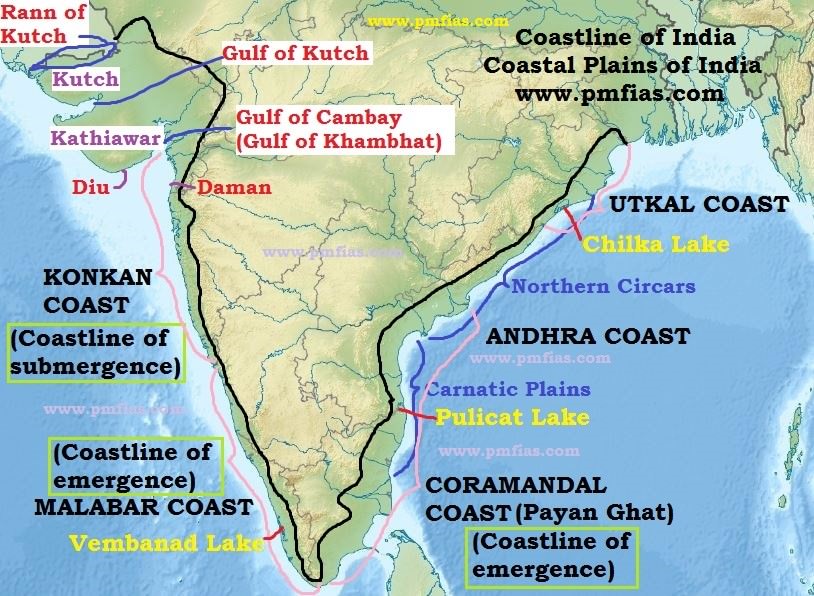
1. The Western coastal Plain lies between the Arabian sea and the western ghats.

2. The Narmada and Tapi flow along the Western coastal Plain.

3. The Eastern coastal Plain in Tamil Nadu is known as the Coromandel Coast.

4. The Mahanadi delta is known as the "Rice of Bowl of India". 

5. Andaman and Nicobar Islands are situated in the Bay of Bengal.

6. Lakshadweep Islands consist of a group of 36 coral islands.

B. Tick the right answer.

1. The Western Coastal Plain in the south is know as 

ans. Malabar coast


2. Oil wells have been dug from the 

ans. Mumbai Coast

3. The river Narmada which originate from the Vindhyas flows into the 

ans. Arabian Sea

4. The Lakshadweep Islands are situated in the 

ans. Arabian Sea

5. The important food of the people of the islands is 

ans. rice with fish

C. Write T for True and F for False.

1. India's coastline stretches from Gujarat to West Bengal True

2. The Eastern coastal Plain lies between Kerala and Gujarat False

3. The coastal regions experience hot and hud weather throughout the year. True.

4. The natives  of the islands live by fishing or farming True

5.Many tourists visit the islands because of their scenic beauty False.

D. Answer the following 

1. What is a coast ? Describe the climate of the coastal regions.

ans. A coast is the part of the lands adjoining or near the sea.

During the summer season the days and nights are hot and Mansoon strikes in July and lasts till September.

2. What are the main occupations of the people in the coastal regions? 

ans.   Agriculture, fishing,seafood processing, salt making,mining and dairy farming are main ocupations of the people in the coastal regions

3. What is an Island?

ans. An Island is any area of land which is surrounded by water.

4. Most of the Islands of Andaman and Nicobar are not populated. Why.

Ans. They do not have fresh water and are covered with dense forest.

5. Why is the Cellular Jail in Port Blair famous?

ans. Cellular Jail is famous because many Indian freedom fighters were kept during British period. 


The previous Chapter 

Globes and Maps Class IV.

Labels:

Sep 27, 2020

Getting to Know Plants

 Fill in The Blanks

1. Short Plants is a herb.

2. The cap-like structure that protects te tip of the root is called root cap


3. The plant part that bears flowers, fruits and leaves is called shoot-system.

4. The main vein of the lea is called midrib.

5. The stalk of flower is called pedicel.

6. The arrangement of veins in a leaf is called venation.

7. A flower with male as well as female reproductive organs is called hermaphrodite

8. Loss of water from the leaves in the form of water vapour is called transpiration.


B. Multiple choice questions

1. The plant with thick, brown, woody stem is 

ans. tree

2. Which of the following has a tap root?

ans. turnip

3. The point on the stem where new leves arise is called a 

ans. node

4. The leaves are green due to the presence of 

ans. chlorophyll

5. The male reproductive organs of a flower is 

ans. stamen

6. A flower without a stalk is called 

ans. sessile flower 

C. Very short Answer 

1. Name the main root of tap root system primary root.

2. The space between two nodes internode

3. Name one shrub rose

4. Weak-stemmed plants that need support to climb climbers

5. Name one plant that has leaves with parallel venation maize.

6. Name one plant that has leaves with reticulate venation mango


D. Short answer questions 

 1. In which part of the plant will you find the following

ans. a. node:-stem 

        b. lamina-leaf

        c. ovary- pistil

        d. petiole- leaf

        e. filament-stamens

2. Give one example of each of the following

ans. 

a. Fibrous rots- maize

b. climber-money plant

c. creeper-pumpkin

d. complete-flower-glmohar 


3. Differentiate between

a tap root system and fibrous root system

ans. Tap root system:- When a plant has one big root with many branches at its sides, it is known as tap root system, e.g. bean, gram, mango, radish, carrot etc. 

Fibrous root system:- When a bunch of slender fiber like roots arise from the base of the stem, it is called fibrous root system. e.g. wheat, maize, paddy, grass

b. Stamen and pistil

ans. 

Stamen:-The male reproductive part of a flower is called stamen

Pistil:- The female reproductive part of a flower is called pistil.


4. What is transpiration?

ans. The loss of excess of water from the plant in the form of water vapour through stomata is called transpiration. 

5. What is venation? Name two types of venation with one example of each.

ans. The arrangement of veins on the leaf is called venation. Reticulate venation in mango and parallel venation in wheat are the example. 


6. Define pollination.

ans. The transfer of pollen grains from anther to stigma of a flower is called pollination.


E.  Long answer questions.

 1. List the important functions of root and stem. 

Ans. Roots do the following functions

(a) Fixation:- Roots help in fixing the plant firmly to the soil.

(b) Absorption: Roots absorb water and mineral salts from the soil which are necessary for the growth of the plant.

(c) Conduction: Roots also conduct water and mineral salkts up to the leaves through the stem where the food is actually made.

(d) Storage: Roots of some plants like beetroot, carrot radish, turnip ans sweet potato store extra food in them. We eat them as vegetables. 

(e) Support: Some roots provide extra support to the plant. These roots are of two types stilt and prop roots 

(f) Climbing: In some plants like betel, money plant, etc roots arise from the nodes and help the plant to stick and climb up the wall. They are called climbing roots. 


2. Describe the structure of of a flower with the help of a well-labelled diagram.

ans. Flower has slender stalk called the pedicel by which it is attached to the stem. A flower without a pedicel is said to be sessile. The pedicel is slightly enlarged at its tip ot form a cushion-like part called the thalamus or receptacle. 

From the thalamus arise the various parts of the flower in  four sets of whorls one within the other. 

There are floral parts as under:

Sepal: The outer most part of a flower.

Petals: Showy parts of a flower. They protect stamens and ovary.

Stamens: It is the male part of flower.

Pistil: It it the female part of a flower. 

When all the parts present in a flower, they are called complete flowers and in some flowers, one or more part is missing they are called incomplete flowers. 

3. What is the use of stomata in plants? Where are they located?

ans.  The leaf surface is covered with minute pores. They are called stomata Exchange of gases takes places through stomata. During this process oxygen is taken in and carbon dioxide is given out. This process is called respiration. 

They are located in leaves of plants.

4. Discuss the functions of a leaf in detail.

ans. Photosynthesis: The leaves of the plant prepare food for the plant. Process by which leaves of plants make food in the presence of sunlight is called photosynthesis. Photosynthesis is unique to green plants. It supplies food to the plants and oxygen to other forms of life. 

Respiration: Exchange of gases takes place through the stomata of the leaf. During this process oxygen is taken in and carbon dioxide is given out. It is called respiration.

Transpiration: The excess of water in the plant is sent out in the form of water in the plant is sent out in the form of water vapour through the stomata. 

Vegetative Propagation: in bryophyllum and begonia plants, leaf-buds develop on te margin of the leaf. The buds fall on the ground and develop into new plants. 

Storage: Some leaves do the function of storage of food. Leaves of cabbage became thick and fleshy when they store food and water. We eat leaves of some plants as vegetables due to their food value,


Have look at the following chapters too.

Body Movement Class VI Science 

Fibre to Fabric Class VI Science 

Changes Around us Class VI Science

 Separation of Substances Class VI Science

Sorting Materials into groups class VI Science

Lights, Shadows and Reflections Science Class VI

 Components of Food Class VI Science


Labels: ,